

In modern sports venues, the experience is no longer defined only by the game itself. It is also shaped by how fans engage with real-time visuals, instant replays, and live information. This is why LED display for sports stadium has become a critical part of stadium infrastructure.
If you are searching for stadium LED screen, sports LED display board, perimeter LED display for stadium, or LED video wall for sports arena, this guide explains everything from types, features, to selection tips.
一、Why LED Displays Are Essential for Sports Stadiums
A sports stadium LED display system is more than just a screen. It is a communication hub that enhances both fan engagement and commercial value.
Key functions include:
- Live match scoring and statistics
- Instant replay and slow-motion highlights
- Advertising and sponsorship exposure
- Crowd engagement content
- Emergency announcements and safety messaging
Modern stadiums rely heavily on LED technology to deliver a professional and immersive experience.
二、Types of LED Displays Used in Sports Stadiums
Different areas of a stadium require different LED display solutions.
1. Stadium Perimeter LED Display (Pitch-side LED Boards)
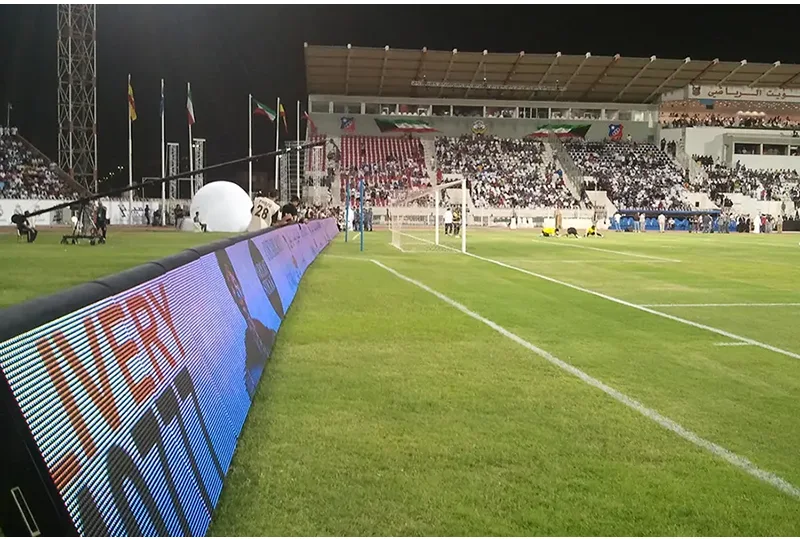
The most common sports LED display system is the perimeter LED board installed around the field.
Features include:
- High refresh rate for broadcast cameras
- Wide viewing angle for spectators
- Waterproof and weather-resistant design
- Real-time advertising rotation
These displays are widely used in football, basketball, and rugby stadiums.
2. Center Hung LED Scoreboard
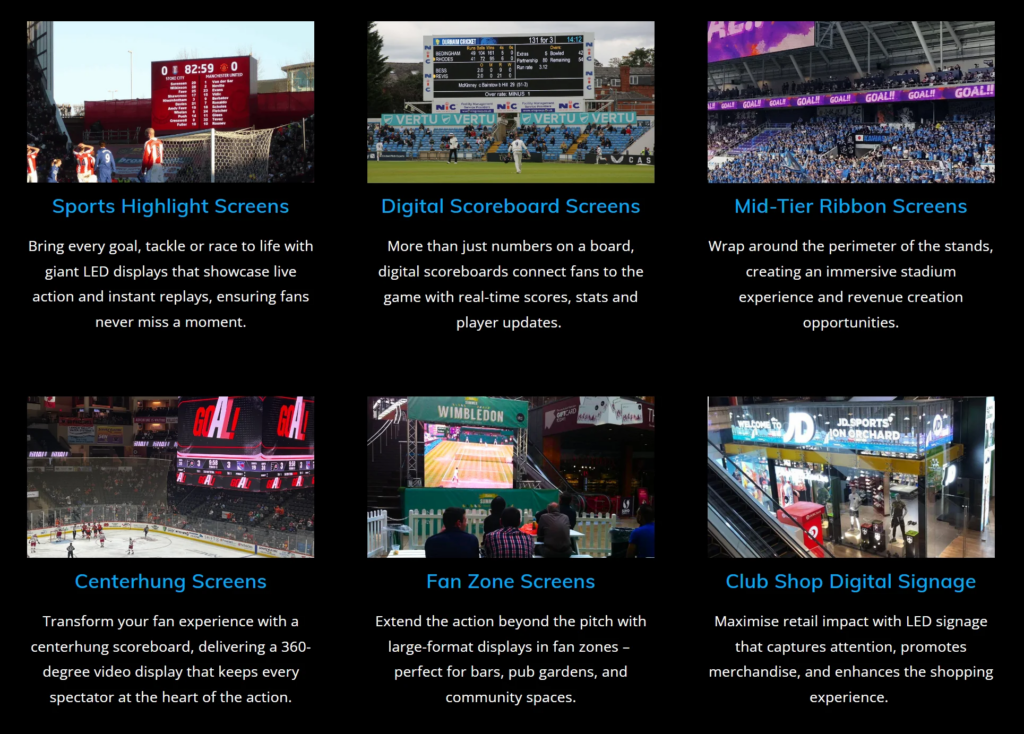
A center-hung LED display is suspended above the field or court, commonly seen in indoor arenas.
It is used for:
- Live scores
- Player stats
- Video replays
- Sponsorship content
This type of LED screen provides 360-degree visibility to all spectators.
3. Stadium LED Video Wall
Large LED video walls for sports stadiums are installed in entrances, concourses, and fan zones.
They are used for:
- Pre-game entertainment
- Live broadcasting
- Fan interaction content
- Event promotions
These screens help improve fan engagement before and after the match.
4. Scoreboard LED Display
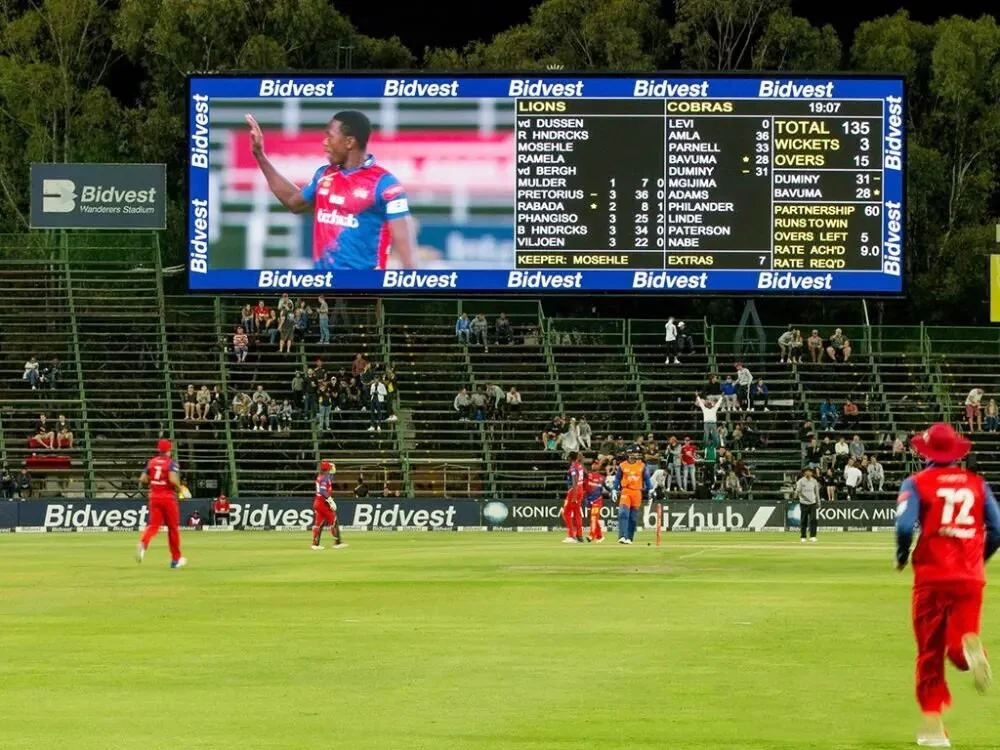
A dedicated LED scoreboard system is essential for displaying:
- Game time
- Scores
- Fouls and penalties
- Team information
Modern digital scoreboards replace traditional mechanical systems for better accuracy and flexibility.
三、Key Features of Stadium LED Displays
When choosing an LED display for sports stadium applications, several technical factors must be considered.
High Brightness for Outdoor Visibility
Outdoor stadium LED screens require brightness levels of 5000–8000 nits to ensure clear visibility under direct sunlight.
High Refresh Rate for Broadcasting
A high refresh rate (≥3840Hz) is essential to avoid flickering during live TV broadcasting and slow-motion replays.
Weatherproof Design (IP65 or Higher)
Stadium LED displays must withstand:
- Rain and humidity
- Dust and wind
- Temperature changes
Waterproof and dustproof protection ensures long-term reliability.
Wide Viewing Angle
A viewing angle of up to 160° or more ensures that spectators from all seats can clearly see the content.
Durable Cabinet Structure
Stadium LED screens are often exposed to impact, vibration, and continuous operation. Strong aluminum or steel cabinets are commonly used for durability.
四、Benefits of LED Displays in Sports Stadiums
Using LED display systems in sports venues provides both operational and commercial advantages.
Enhance Fan Experience
Real-time visuals, instant replays, and interactive content significantly improve spectator engagement.
Increase Sponsorship Revenue
LED perimeter boards allow dynamic advertising rotation, enabling multiple sponsors to share exposure time.
Improve Game Communication
Clear display of scores, stats, and announcements ensures smooth game operation.
Support Live Broadcasting
High-quality LED screens are optimized for TV cameras, enhancing broadcast quality and professional presentation.
五、Indoor vs Outdoor Stadium LED Displays
Different stadium environments require different LED solutions.
Outdoor Stadium LED Displays
- Higher brightness (5000–8000 nits)
- Strong waterproof protection
- Long viewing distance
- Large pixel pitch (P6–P10 commonly used)
Indoor Sports Arena LED Displays
- Medium brightness (1000–2000 nits)
- Smaller pixel pitch (P2–P4)
- Higher resolution for close viewing
- Often used in basketball and volleyball arenas
六、Common Pixel Pitch for Sports LED Displays
Choosing the correct pixel pitch is critical for performance:
- P6–P10: Outdoor stadium perimeter LED screens
- P4–P6: Medium distance viewing stadium displays
- P2–P4: Indoor arenas and VIP viewing areas
七、Applications of LED Display in Sports Industry
LED displays are widely used across different sports:
- Football stadiums
- Basketball arenas
- Tennis courts
- Baseball stadiums
- Esports arenas
- Olympic venues
Each application requires tailored brightness, resolution, and structure design.
八、Final Thoughts: The Future of Stadium LED Display Systems
As sports entertainment continues to evolve, LED display technology is becoming a core part of stadium infrastructure.
From perimeter advertising boards to giant video walls and intelligent scoreboards, LED systems are transforming how fans experience live sports.
In the future, we will see more integration of:
- Real-time data visualization
- Interactive fan engagement systems
- AI-powered content control
- Ultra-high-definition LED displays
Investing in the right sports stadium LED display solution is not just about technology—it is about creating unforgettable experiences for audiences and maximizing commercial value for venue operators.
