

Choosing the right pixel pitch for an LED display is one of the most important decisions in any LED screen project. It directly affects image quality, viewing experience, cost, and overall return on investment.
If you are searching for how to choose LED display pixel pitch, best pixel pitch for LED screen, or P1.5 vs P2 vs P3 vs P5 LED display, this guide will help you make the right decision.
一、What Is Pixel Pitch in LED Display?
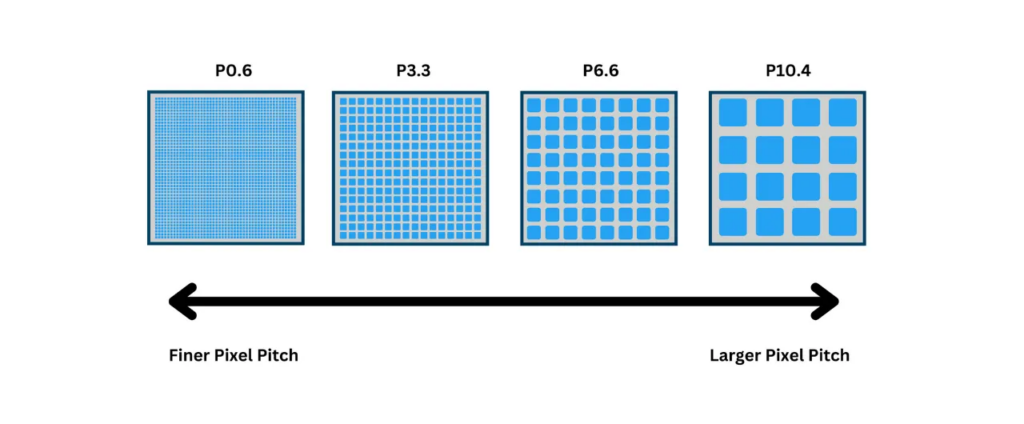
Pixel pitch refers to the distance (in millimeters) between the centers of two adjacent LED pixels.
- Smaller pixel pitch = higher resolution
- Larger pixel pitch = lower cost
- Affects how close viewers can stand while still seeing a clear image
Example:
- P1.5 = 1.5mm distance between pixels
- P5 = 5mm distance between pixels
二、Why Pixel Pitch Matters
Pixel pitch determines:
- Image clarity
- Minimum viewing distance
- Screen cost per square meter
- Suitable application scenarios
Choosing the wrong pixel pitch can lead to:
- Overspending (too fine for the application)
- Poor image quality (too coarse for close viewing)
三、How to Choose Pixel Pitch (Most Important Rule)
The correct pixel pitch depends mainly on viewing distance.
Simple Industry Formula:
- Minimum viewing distance ≈ Pixel pitch (mm) × 1 meter
- Optimal viewing distance ≈ Pixel pitch (mm) × 2–3 meters
四、Pixel Pitch Selection Guide (Practical Table)
Indoor LED Display
| Pixel Pitch | Viewing Distance | Application |
|---|---|---|
| P0.9–P1.2 | 1–3 meters | Luxury control rooms, broadcast studios |
| P1.5 | 2–4 meters | Meeting rooms, boardrooms |
| P1.8–P2.5 | 3–6 meters | Conference halls, retail indoor displays |
Outdoor LED Display
| Pixel Pitch | Viewing Distance | Application |
|---|---|---|
| P3–P4 | 3–10 meters | Medium close outdoor ads |
| P5 | 5–50 meters | Standard outdoor advertising |
| P6–P10 | 10–100 meters | Large billboards, highways |
五、Key Factors to Consider When Choosing Pixel Pitch
1. Viewing Distance (Most Important Factor)
The closer the audience, the smaller the pixel pitch required.
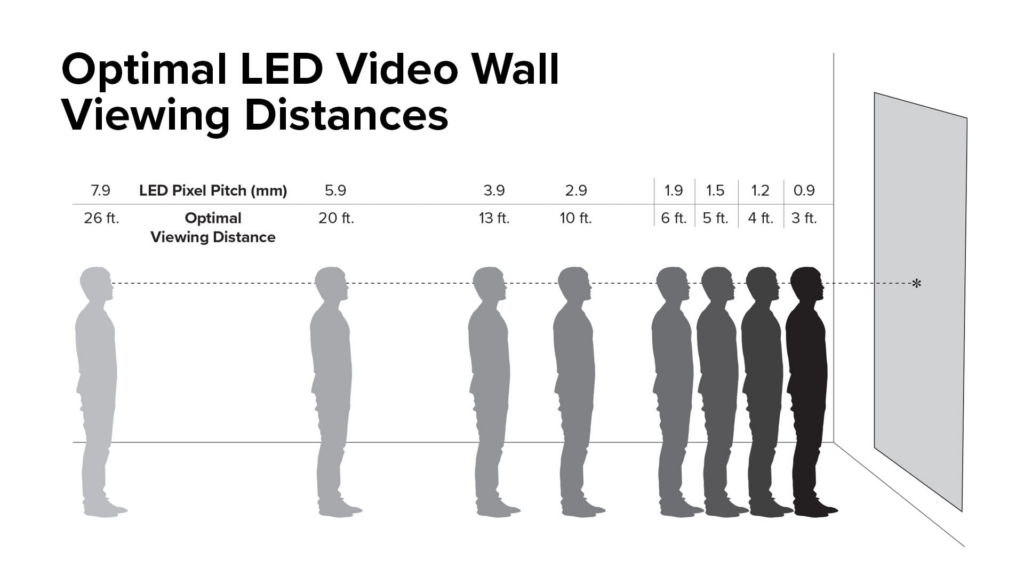
- Close viewing → fine pitch (P1.2–P2.5)
- Medium distance → P3–P5
- Long distance → P6 and above
2. Budget (Cost vs Resolution Balance)
Smaller pixel pitch = higher cost due to more LED chips.
- P1.5 is significantly more expensive than P3
- P5 is a cost-effective outdoor standard
3. Application Type
Different use cases require different resolutions:
- Conference rooms → high resolution (P1.2–P1.8)
- Retail stores → medium fine pitch (P1.8–P2.5)
- Outdoor advertising → P5–P10
4. Screen Size
Larger screens can use slightly larger pixel pitch because viewing distance increases.
5. Content Type
- Text-heavy content → smaller pixel pitch needed
- Video advertising → moderate pixel pitch is sufficient
- Static images → flexible options
六、Common Mistakes When Choosing Pixel Pitch
1. Choosing Too Fine (Over-Specification)
- Waste of budget
- No visible improvement at long distance
Example:
Using P1.2 for a 10-meter viewing distance screen
2. Choosing Too Large (Under-Specification)
- Pixelation visible
- Poor visual experience
Example:
Using P10 for indoor retail display
3. Ignoring Viewing Distance Changes
Some projects have mixed viewing distances (close + far). This requires balance.
七、Pixel Pitch vs Cost Relationship
- Smaller pitch → higher cost per m²
- Larger pitch → lower cost per m²
But cost should always be evaluated with performance + application, not just price.
八、Best Pixel Pitch Recommendations
- High-end indoor LED wall → P1.2–P1.5
- Standard conference room → P1.5–P1.8
- Indoor retail display → P1.8–P2.5
- Outdoor advertising → P3–P5
- Large outdoor billboards → P6–P10
九、Final Thoughts: Choosing the Right Pixel Pitch
Selecting the right pixel pitch is about matching resolution with real viewing distance, not simply choosing the smallest option.
A well-chosen pixel pitch ensures:
- Optimal visual quality
- Controlled budget
- Higher return on investment
- Better user experience
In LED display projects, the smartest choice is always the one that balances performance + cost + application scenario.
If you need any advice or quotes regarding your project, please contact the Chinastar team. We are available 24/7 to provide tailored quotes and advice for your project.
