

Choosing the right indoor LED display screen is no longer just about size or price. As LED display technology continues to evolve, businesses now expect higher resolution, better reliability, and smarter integration for applications such as LED video walls, digital signage displays, and commercial LED screens.
Whether you are planning a retail installation, a conference room upgrade, or a large-scale indoor LED video wall, understanding the key factors behind product selection will help you make a more cost-effective and future-proof decision.
一、Understanding Indoor LED Display Basics
An indoor LED display is designed for environments where viewing distance is relatively close and image quality is critical. Compared to outdoor LED display screens, indoor models focus more on resolution, color accuracy, and seamless visual performance.
Today’s commercial indoor LED displays are widely used in shopping malls, showrooms, control rooms, studios, and corporate offices. With the rise of fine pitch LED display technology, even close-range viewing can achieve ultra-high-definition clarity, making LED video walls a strong alternative to traditional LCD video walls.
二、Pixel Pitch and Viewing Experience
Pixel pitch is one of the most important specifications when selecting an indoor LED display screen. It directly affects image clarity and viewing comfort. A smaller pixel pitch means higher pixel density, resulting in sharper visuals, especially at close viewing distances.
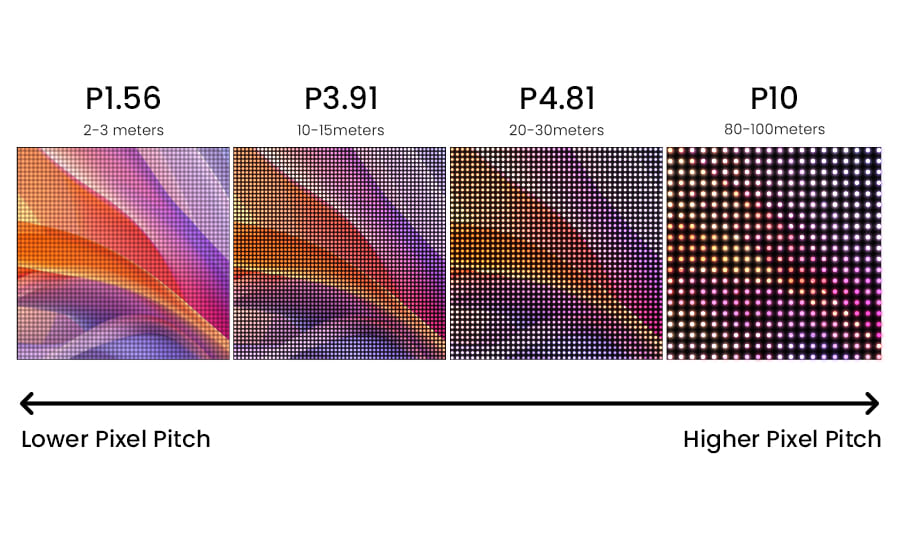
For example, a fine pitch LED display such as P1.2 or P1.5 is ideal for meeting rooms and control centers where viewers sit close to the screen. On the other hand, a P2 or P2.5 indoor LED display is often sufficient for retail environments or exhibition spaces where the viewing distance is slightly greater.
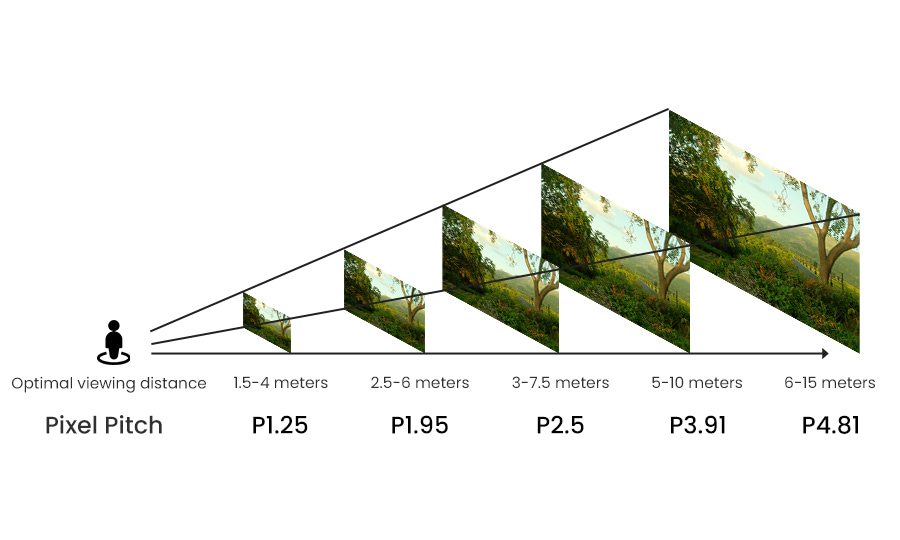
Choosing the right pixel pitch is essentially about balancing visual performance and cost, ensuring that the LED display delivers clear images without unnecessary investment.
三、Indoor LED Display Price and Cost Considerations
The cost of an indoor LED display screen can vary significantly depending on several factors, including pixel pitch, screen size, LED technology, and system configuration. In general, the smaller the pixel pitch, the higher the price, due to the increased number of LED chips and manufacturing complexity.
Beyond the display itself, buyers should also consider the total system cost, including control systems, installation structures, and content management solutions. A well-designed LED video wall solution is not just about the panel price, but about achieving long-term performance and value.
For most commercial projects, working with an experienced LED display supplier can help optimize the configuration and avoid unnecessary costs.
四、Maintenance Accessibility and Installation Environment
Maintenance is a critical factor that is often overlooked when choosing an indoor LED display. Depending on the installation environment, you may need to decide between front maintenance and rear maintenance designs.
Front service indoor LED displays are particularly useful for wall-mounted installations or locations with limited rear access. They allow technicians to perform repairs and module replacements directly from the front, saving space and reducing downtime. Rear maintenance designs, on the other hand, may be more suitable for large installations where there is sufficient service space behind the screen.
Considering maintenance access in advance ensures that your LED display screen remains easy to service and cost-efficient over its lifespan.
五、Visual Performance: Brightness, Contrast, and Color Quality
Although indoor LED displays do not require the extreme brightness of outdoor LED screens, they still need to perform well under ambient lighting conditions. A typical indoor LED display brightness ranges from 600 to 1200 nits, which is sufficient for most commercial environments.
Equally important is the contrast ratio and color uniformity. A high-quality LED video wall should deliver deep blacks, vibrant colors, and consistent brightness across the entire screen. This is especially important for applications such as brand presentations, retail displays, and corporate environments where visual impact matters.
六、Refresh Rate and Image Stability
The refresh rate of an indoor LED display screen plays a crucial role in image smoothness and camera performance. A higher refresh rate reduces flickering and ensures stable visuals, particularly when the screen is used for video playback or live broadcasting.
For most modern applications, a refresh rate of 3840Hz or higher is recommended. This is especially important in studios, events, and conference environments where LED displays are often captured on camera.
A high refresh rate not only improves visual quality but also enhances the overall professionalism of the display system.
七、Application Scenarios and Choosing the Right Solution
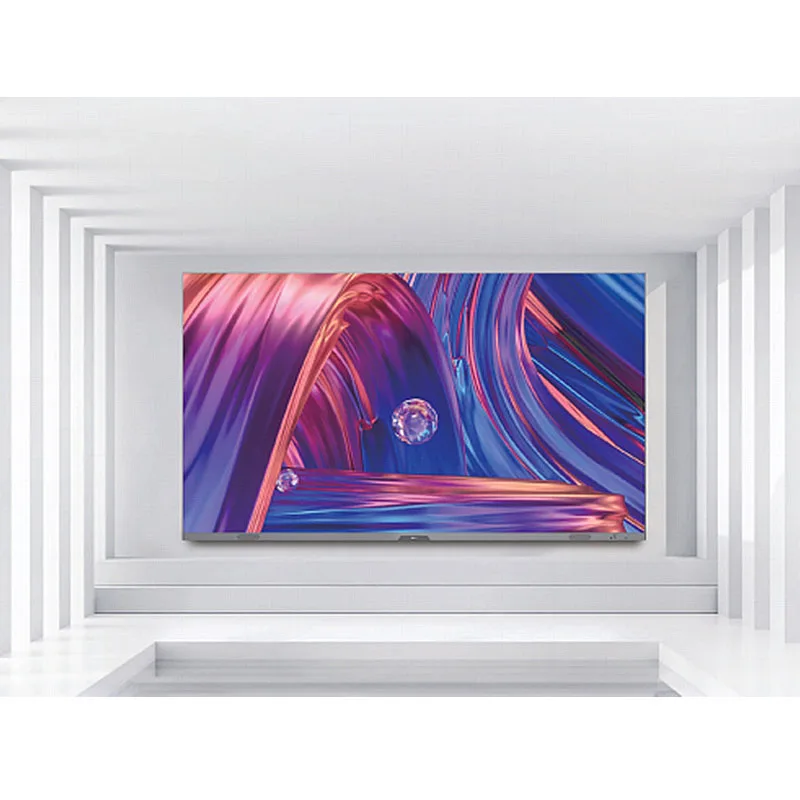
Different applications require different types of indoor LED display solutions. In retail environments, the focus is often on dynamic content and eye-catching visuals, making medium pixel pitch LED displays a practical choice. In corporate settings, such as meeting rooms or boardrooms, fine pitch LED video walls provide the clarity needed for presentations and collaboration.
Control rooms and broadcast studios, on the other hand, demand ultra-high resolution, reliability, and continuous operation, making advanced fine pitch LED displays the preferred option.
Understanding your specific application helps ensure that the selected LED display screen aligns with both performance expectations and budget requirements.
八、Choosing a Reliable LED Display Supplier
Selecting the right LED display manufacturer or supplier is just as important as choosing the product itself. A professional supplier will not only provide high-quality indoor LED displays but also offer technical guidance, customized solutions, and after-sales support.
From pixel pitch selection to system integration, working with an experienced partner ensures that your indoor LED video wall or digital signage display is optimized for both performance and longevity.
九、Conclusion
Choosing the right indoor LED display screen involves more than just comparing specifications. It requires a clear understanding of pixel pitch, price, maintenance requirements, visual performance, and application needs.
With the rapid growth of commercial LED displays and digital signage solutions, investing in the right indoor LED display can significantly enhance communication, branding, and user experience.
