

As LED display technology continues to evolve, hardwired LED displays have become increasingly popular in professional and commercial projects. Their clean structure, fast installation, and reliable performance make them a preferred choice for high-end indoor LED walls.
However, many users still misunderstand what hardwired truly means and how such displays should be properly disassembled and maintained.
This article explains the correct definition of hardwired LED displays, provides a safe disassembly guide, and highlights where they are best used, common pixel pitches, and key advantages.
一、What Is a Hardwired LED Display?
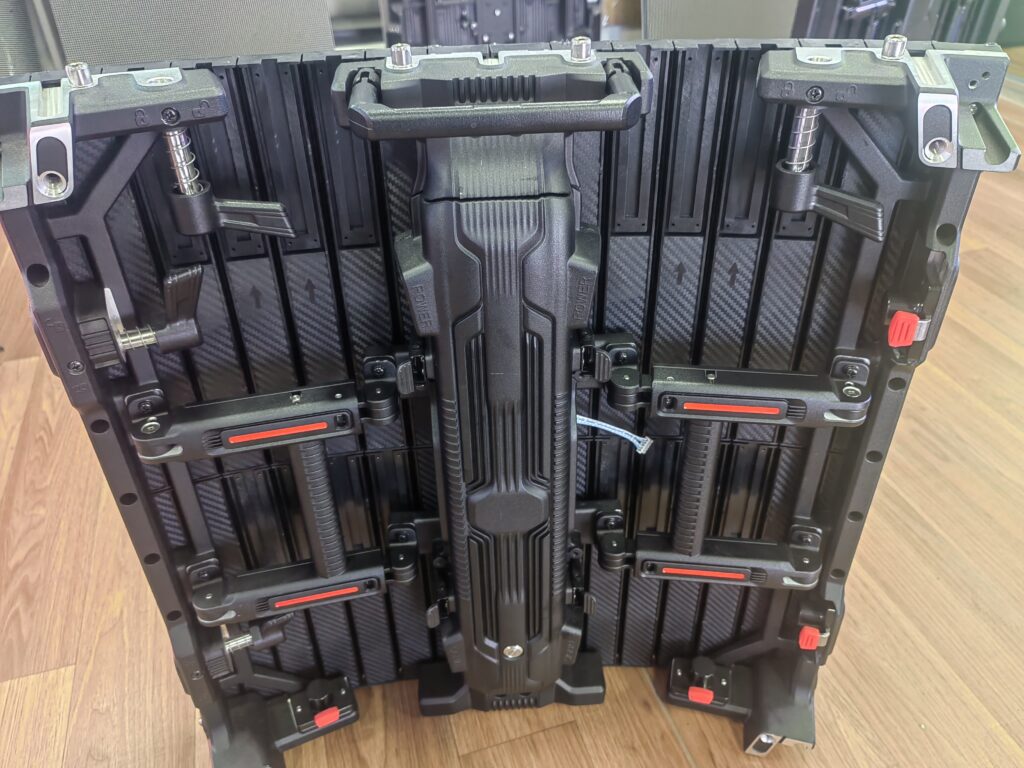
A hardwired LED display refers to an LED cabinet design where:
- Power and signal connections are integrated directly into the cabinet
- LED modules connect via pin-to-pin or board-to-board connectors
- No external ribbon cables or loose power wires are required between modules
👉 Hardwired does not mean wireless.
It means internally structured wiring that eliminates cable clutter and manual plugging.
二、Why Disassembly Matters for Hardwired LED Displays
Unlike traditional LED displays that require unplugging multiple cables, hardwired LED displays rely on precision connectors and mechanical locks.
Correct disassembly:
- Prevents connector damage
- Reduces maintenance time
- Extends the lifespan of modules and cabinets
Understanding the cabinet structure is essential before removal.
三、Step-by-Step: How to Disassemble a Hardwired LED Display
Step 1: Power Off the System
- Shut down the main power supply
- Disconnect external power input
- Ensure zero residual current
Safety always comes first.
Step 2: Access the Front or Rear Service Panel
Depending on the cabinet design:
- Front-service: Remove modules using a suction tool
- Rear-service: Open the rear cabinet door
Hardwired cabinets usually feature tool-free or quick-lock mechanisms.
Step 3: Unlock the Module Fixing System
Instead of unplugging cables:
- Release the mechanical locks
- Pull the module straight outward
Power and signal disconnect automatically via integrated connectors.
⚠️ Avoid twisting or tilting the module.
Step 4: Remove the LED Module
Once unlocked:
- The module separates cleanly
- No ribbon cables or power cords remain attached
This significantly reduces maintenance complexity.
Step 5: Remove Power Supply or Receiving Card (If Needed)
For deeper servicing:
- Unscrew the power supply or receiving card
- Slide it out from the cabinet slot
- Disconnect via plug-type connectors
No wire bundles or manual labeling required.
四、Where Are Hardwired LED Displays Best Used?
Hardwired LED displays are especially suitable for projects that require stability, precision, and frequent maintenance.
Control & Command Centers
- 24/7 operation
- High reliability and low failure rate
- Fast front maintenance
Conference Rooms & Corporate Lobbies
- Clean appearance with no visible cables
- Quiet operation
- High-resolution display for close viewing
Broadcast Studios & TV Production
- Stable signal transmission
- Seamless splicing
- Accurate color performance
High-End Commercial LED Video Walls
- Shopping malls
- Brand showrooms
- Airports and exhibition halls
五、Common Pixel Pitches for Hardwired LED Displays
Hardwired designs are most commonly used in fine-pitch indoor LED displays, including:
- P0.9 / P1.2 – Broadcast studios, command centers
- P1.25 / P1.5 – Conference rooms, control rooms
- P1.8 / P2.0 – Commercial indoor LED walls
- P2.5 – Cost-effective indoor projects
Smaller pixel pitches benefit most from hardwired structures due to tighter space and higher precision requirements.
六、Key Advantages of Hardwired LED Displays
1. Faster Installation & Disassembly
- Plug-and-play cabinet design
- No manual cable connections
2. Cleaner Internal Structure
- Reduced cable clutter
- Better airflow and heat dissipation
3. Lower Failure Rate
- Fewer connection points
- Less risk of loose or damaged cables
4. Easier Maintenance
- Front service support
- Faster module replacement
5. Ideal for Fine-Pitch Displays
- High connector accuracy
- Stable power and signal transmission
七、Hardwired vs Traditional Wired LED Displays
| Feature | Hardwired LED Display | Traditional Wired LED Display |
|---|---|---|
| Cable connections | Integrated | Multiple external cables |
| Installation speed | Fast | Slower |
| Maintenance difficulty | Low | Higher |
| Visual cleanliness | Excellent | Average |
| Best pixel pitch | P0.9–P2.5 | P2.5 and above |
八、Final Thoughts
A hardwired LED display is not just about easier installation—it represents a more advanced cabinet engineering approach.
When disassembled correctly, hardwired LED displays offer:
- Faster maintenance
- Greater reliability
- Longer operational lifespan
As fine-pitch LED technology continues to dominate indoor applications, hardwired cabinet design is becoming the industry standard for professional LED display projects.
