

When choosing an LED screen, refresh rate is one of the technical specifications that should not be overlooked. Many buyers focus on pixel pitch, brightness, and resolution, but LED display refresh rate also has a major impact on image smoothness and camera performance.
So, what is refresh rate in an LED screen?
Refresh rate refers to how many times per second an LED display refreshes the image shown on the screen. It is measured in Hertz (Hz). For example, a 3840Hz LED screen refreshes the image up to 3,840 times per second.
A higher refresh rate can provide smoother motion and reduce visible flicker, especially when an LED display is filmed with a professional camera. This makes refresh rate particularly important for concert LED screens, stage LED displays, broadcast studios, virtual production, conference rooms, and commercial LED video walls.
一、What Does Refresh Rate Mean in an LED Screen?
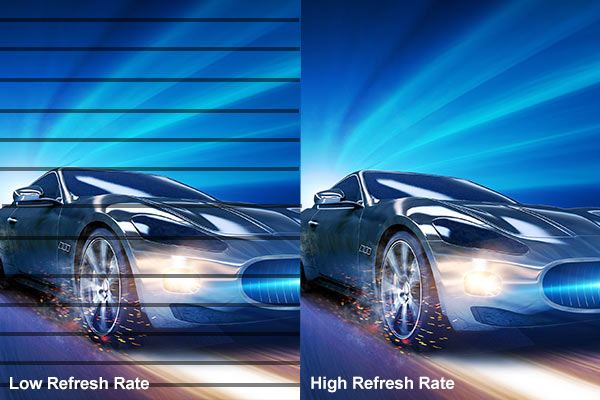
Refresh rate describes how frequently the display updates its image within one second.
For example, a 1920Hz LED display refreshes its image 1,920 times per second, while a 3840Hz LED display refreshes it 3,840 times per second.
In practical terms, refresh rate affects how smoothly moving images appear and how the LED screen performs when viewed through a camera.
It is important to understand that refresh rate is not the same as frame rate. Frame rate refers to how many frames a video source produces per second, such as 24fps, 30fps, or 60fps. Refresh rate describes how frequently the LED display updates those frames.
二、Why Is Refresh Rate Important for LED Displays?
A high refresh rate helps an LED screen reproduce dynamic content more smoothly and can reduce flicker or scanning artifacts that may become visible when the screen is recorded.
This is particularly important for applications where the LED display is not only viewed directly but also captured by cameras.
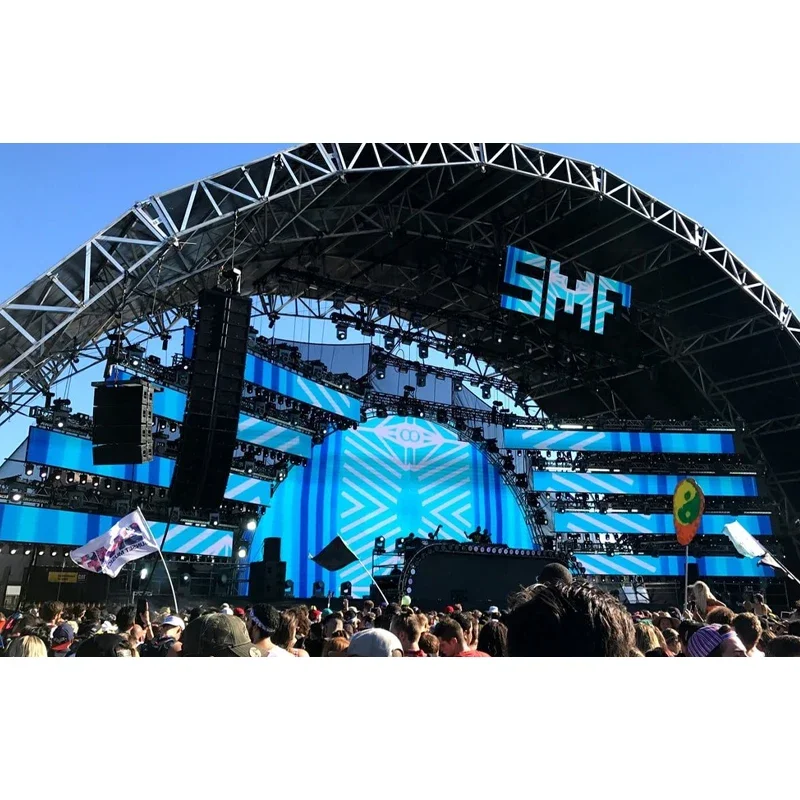
For example, a concert stage may use several large LED screens as a visual background. The audience sees the display directly, while professional cameras simultaneously record the performance. If the LED screen has insufficient refresh performance, unwanted flicker, rolling lines, or other camera artifacts may appear in the recorded footage.
For this reason, LED display refresh rate is an important specification for professional video applications.
三、LED Screen Refresh Rate and Camera Performance
One of the biggest reasons buyers ask about refresh rate is camera shooting.
When a camera records an LED screen, the camera’s shutter speed and the display’s scanning and refresh behavior interact. This can produce effects that are not obvious to the naked eye.
A low or poorly configured refresh system may result in:
- Visible flicker in camera footage
- Horizontal scanning lines
- Rolling bars
- Uneven brightness
- Inconsistent image capture
A higher refresh rate can significantly reduce these problems when combined with an appropriate LED driver system, receiving card, scan mode, and camera settings.
This is why professional rental LED screens for concerts and events commonly specify high refresh rates.
四、Common LED Display Refresh Rates
Different LED displays can use different refresh rates depending on the LED driver IC, receiving system, scan mode, and product design.
| Refresh Rate | Typical Application | General Performance |
|---|---|---|
| 960Hz | Basic LED display applications | Suitable for simple content |
| 1920Hz | Standard commercial LED screens | Good for general video |
| 3840Hz | Professional LED displays | Better for video and camera shooting |
| 7680Hz+ | High-end professional applications | Designed for demanding visual and camera requirements |
These figures are general industry ranges rather than strict application standards. Actual performance depends on the complete LED display system.
五、Is 3840Hz Refresh Rate Good for an LED Screen?
3840Hz is a commonly specified refresh rate for professional LED displays and is generally suitable for many commercial and event applications.
It provides smoother visual performance than lower-refresh-rate systems and is widely used in:
- Concert LED screens
- Rental LED displays
- Stage LED screens
- Conference room LED walls
- Indoor commercial LED displays
- Broadcast and event applications
For an LED display that will frequently be filmed, 3840Hz is often a practical specification to consider.
However, refresh rate alone does not determine camera performance. The LED module, driver IC, scan mode, receiving card, processor, and camera settings all contribute to the final result.
六、3840Hz vs 7680Hz LED Display
For buyers comparing high-refresh-rate LED screens, 3840Hz vs 7680Hz is a common question.
| Feature | 3840Hz LED Display | 7680Hz LED Display |
|---|---|---|
| Refresh Performance | High | Very high |
| General Video | Excellent | Excellent |
| Camera Applications | Suitable for many applications | Suitable for demanding applications |
| Typical Cost | More economical | Higher |
| Common Applications | Events, retail, conference rooms, stage | Broadcast, virtual production, premium applications |
A 7680Hz LED screen is not automatically necessary for every project. If the display is mainly used for normal advertising or direct viewing, 3840Hz may already provide sufficient performance.
For professional filming, broadcast, virtual production, and demanding stage applications, higher refresh specifications may provide additional flexibility.
七、Refresh Rate vs Frame Rate: What Is the Difference?
Refresh rate and frame rate are related but they are not the same thing.
Frame rate is determined by the video source. For example, a camera or media server may output 24fps, 30fps, or 60fps.
Refresh rate is determined by the LED display system and describes how frequently the display updates the image.
For example, a video may be produced at 30fps while the LED display refreshes at 3840Hz.
Therefore, a higher LED screen refresh rate does not mean the original video automatically becomes higher frame rate. Instead, it allows the display system to update and reproduce the incoming video more frequently.
八、Refresh Rate vs Pixel Pitch
Pixel pitch and refresh rate are two different LED display specifications.
Pixel pitch mainly affects pixel density, resolution, and recommended viewing distance.
Refresh rate mainly affects motion reproduction, perceived flicker, and camera performance.
| Specification | Main Effect |
|---|---|
| Pixel Pitch | Image detail and viewing distance |
| Refresh Rate | Motion smoothness and camera performance |
| Brightness | Visibility under different lighting conditions |
| Resolution | Total image detail |
| Contrast | Difference between dark and bright areas |
A high-quality LED video wall needs the right combination of these specifications rather than simply maximizing one parameter.
九、What Refresh Rate Should an LED Screen Have?
The ideal refresh rate depends on the application.
For a basic indoor LED display used for digital signage, advertising, or simple video playback, 1920Hz may be sufficient depending on the system configuration.
For a commercial LED video wall, retail display, or conference room LED screen, 3840Hz is a common specification for smooth video and reliable camera performance.
For concert stages, rental LED screens, broadcast environments, and virtual production, buyers should pay closer attention to high refresh rates and the complete display system, particularly when professional cameras will be used.
十、Refresh Rate for Concert and Stage LED Screens
Concerts and live events are among the most demanding applications for LED displays.
A stage LED screen may simultaneously display fast-moving graphics, live camera feeds, lighting effects, and high-resolution video while being recorded by multiple cameras.
For this reason, professional concert LED screens often use high refresh rates, commonly 3840Hz or higher.
In addition to refresh rate, event organizers should evaluate pixel pitch, brightness, grayscale performance, scan mode, cabinet design, and color consistency.
十一、Refresh Rate for Conference Room LED Displays
Conference room LED displays have different requirements.
A conference room may display:
- Presentations
- Video conferencing
- Charts and data
- Corporate videos
A high refresh rate can improve the appearance of moving content and camera footage, but extremely high refresh specifications may not be necessary for every meeting room.
For professional conference room LED video walls, 3840Hz is commonly considered a strong specification, particularly when video conferencing cameras are involved.
十二、Refresh Rate for Outdoor LED Advertising Screens
Outdoor advertising screens are generally viewed from a greater distance, so pixel pitch and brightness often receive more attention than extremely high refresh rates.
However, if an outdoor LED advertising screen will be recorded for:
- Commercial videos
- Live events
- Social media content
- Television broadcasts
a higher refresh rate becomes more important.
A good outdoor LED display should therefore balance refresh rate with brightness, weather protection, pixel pitch, and energy efficiency.
十三、Does Higher Refresh Rate Mean Better LED Display?
Not necessarily.
A higher refresh rate can improve certain aspects of LED display performance, but it should not be considered the only indicator of quality.
A professional LED screen also depends on:
- LED chip quality
- Driver IC
- Scan mode
- Receiving card
- Video processor
- Grayscale performance
- Brightness
- Color calibration
- Cabinet design
For example, simply increasing the advertised refresh rate does not guarantee excellent camera performance if other components of the display system are poorly designed.
When comparing LED screen suppliers, it is better to evaluate the complete technical configuration rather than looking at refresh rate alone.
十四、How to Choose the Right LED Screen Refresh Rate?
Start by considering whether the screen will be filmed.
If the LED display is mainly used for direct viewing, a standard refresh rate may be sufficient.
If it will be used for concerts, events, video production, live streaming, or broadcast, a higher refresh rate should be considered.
For most professional applications, 3840Hz is a useful starting specification, while high-end broadcast and virtual production projects may require more advanced configurations.
The final selection should be based on the entire LED display system and the requirements of the camera and video production workflow.
十五、Frequently Asked Questions About LED Display Refresh Rate
Q1:What is refresh rate in an LED screen?
Refresh rate is the number of times an LED display updates its image per second. It is measured in Hertz (Hz). A 3840Hz LED display can refresh the image up to 3,840 times per second.
Q2:Is 1920Hz enough for an LED display?
For many basic commercial LED display applications, 1920Hz can be sufficient. However, professional event, camera, and broadcast applications often require higher refresh performance.
Q3:Is 3840Hz good for a concert LED screen?
Yes. 3840Hz is a common specification for professional rental LED screens and stage LED displays and can provide good visual and camera performance when the rest of the system is properly configured.
Q4:Is 7680Hz better than 3840Hz?
A 7680Hz LED display provides a higher refresh specification, which can be useful for demanding professional applications. However, it does not automatically mean the entire LED display is better. The complete hardware and video system should be considered.
Q5:Does refresh rate affect LED screen image quality?
Refresh rate mainly affects motion reproduction, perceived flicker, and camera capture. Image quality also depends heavily on pixel pitch, resolution, brightness, contrast, color calibration, and LED components.
十六、Conclusion
Understanding what refresh rate means in an LED screen is important when choosing a professional LED display.
For general digital signage and commercial applications, a standard refresh rate may be sufficient. For concert LED screens, rental LED displays, conference room LED walls, broadcast studios, and camera-based applications, higher refresh performance becomes increasingly important.
A 3840Hz LED display is a common choice for professional applications, while higher refresh configurations can be considered for broadcast, virtual production, and other demanding environments.
Ultimately, refresh rate should be evaluated together with pixel pitch, brightness, driver IC, scan mode, grayscale, color performance, and video processing to select the right LED display solution for a specific project.
