

When choosing an LED screen, one of the most important technical parameters you’ll encounter is refresh rate. But what exactly does it mean, and why does it matter?
If you are searching for LED display refresh rate, what is Hz in LED screen, or best refresh rate for LED video wall, this guide will give you a clear and practical understanding.
一、What Is Refresh Rate in LED Display?
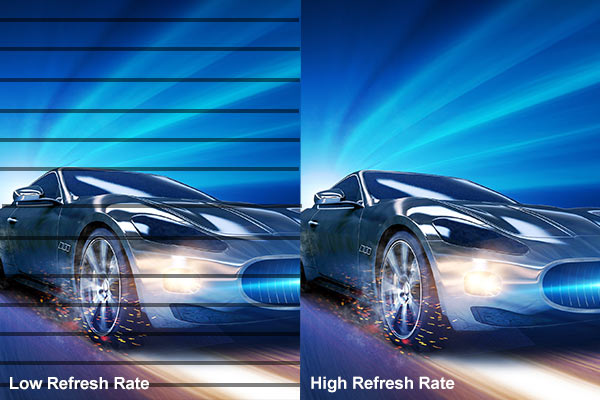
Refresh rate refers to how many times per second an LED display updates the image on the screen. It is measured in Hertz (Hz).
For example:
- 1920Hz = screen refreshes 1,920 times per second
- 3840Hz = screen refreshes 3,840 times per second
A higher refresh rate means smoother visuals, less flickering, and better performance, especially for video and live broadcasting.
二、Why Refresh Rate Is Important in LED Displays
Refresh rate directly affects the visual quality and usability of an LED screen.
1. Smoother Video Playback
Higher refresh rates ensure smooth motion, especially for:
- Fast-moving content
- Sports events
- Live video feeds
2. No Flickering on Camera
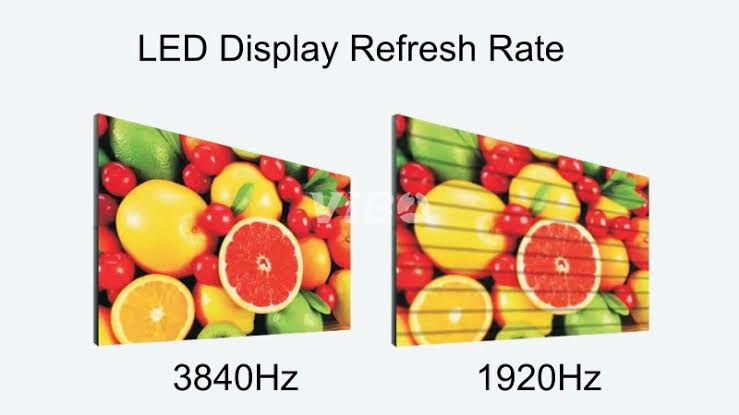
Low refresh rate LED displays often show flickering when recorded by cameras.
High refresh rate (≥3840Hz) is essential for:
- TV broadcasting
- Live streaming
- Stage events and concerts
3. Better Viewing Experience
A high refresh rate improves:
- Image stability
- Visual comfort
- Overall display quality
This is especially important for indoor LED video walls with close viewing distance.
三、LED Refresh Rate vs Frame Rate: What’s the Difference?
Many people confuse refresh rate with frame rate, but they are different concepts.
- Refresh Rate (Hz): How many times the screen refreshes per second
- Frame Rate (FPS): How many frames the video source outputs per second
For example:
- A video may run at 60 FPS
- The LED display may refresh at 3840Hz
Higher refresh rates ensure that each frame is displayed more smoothly and without artifacts.
四、Common LED Display Refresh Rate Standards
Different applications require different refresh rate levels.
Standard Refresh Rate
- 1920Hz
- Suitable for basic indoor LED displays
- Acceptable for general advertising
High Refresh Rate
- 3840Hz
- Industry standard for professional LED displays
- Ideal for events, retail, and commercial use
Ultra-High Refresh Rate
- 7680Hz or higher
- Used for broadcast studios and high-end applications
- Eliminates camera scan lines completely
五、What Is the Best Refresh Rate for LED Displays?
The ideal refresh rate depends on your application.
For Indoor LED Displays
- Recommended: ≥3840Hz
- Ensures smooth visuals and comfortable viewing
For Outdoor LED Screens
- Recommended: ≥1920Hz
- Higher is better for advertising and video playback
For Stage and Rental LED Displays
- Recommended: ≥3840Hz or 7680Hz
- Essential for live broadcasting and professional events
For TV Broadcasting and Studios
- Recommended: ≥7680Hz
- Prevents flickering and moiré effects on camera
六、What Happens If Refresh Rate Is Too Low?
Using a low refresh rate LED display can lead to several issues:
- Visible flickering
- Poor video quality
- Camera scan lines
- Eye discomfort for viewers
- Reduced professional appearance
This is especially problematic in high-end environments like retail stores, conferences, and live events.
七、Refresh Rate vs Gray Scale in LED Displays
Refresh rate is often linked with gray scale performance.
- Higher refresh rate → better gray scale levels
- Better gray scale → smoother color transitions
This results in more realistic and vibrant images.
八、Factors That Affect LED Display Refresh Rate
Several technical components determine refresh rate performance:
- LED driver IC quality
- Control system performance
- PCB design
- Signal transmission stability
Choosing a high-quality LED display supplier ensures stable refresh rate performance.
九、Final Thoughts: Why Refresh Rate Matters
Refresh rate is one of the most critical factors in determining LED display quality.
- For basic use, 1920Hz may be sufficient
- For professional applications, 3840Hz is recommended
- For broadcast-level performance, 7680Hz is ideal
If you want a smooth, flicker-free, and high-quality LED display, always prioritize refresh rate when making your decision.
In today’s competitive market, a high refresh rate LED screen is not just a technical advantage—it is a necessity for delivering premium visual experiences.
