

As global demand for outdoor LED display, LED screen, and digital signage solutions continues to grow, more buyers are paying close attention to the differences between outdoor LED display modules and standard indoor LED modules.
Although both belong to the LED display industry, their design structure, performance standards, and technical requirements are significantly different.
In this article, we’ll break down the key differences, required features, and industry specifications of outdoor LED display modules to help integrators, distributors, and project contractors make informed decisions.
一、What Is an Outdoor LED Display Module?

An outdoor LED display module is the basic building unit of an outdoor LED screen. Multiple LED modules are assembled into an LED cabinet, and cabinets are combined into a complete outdoor LED video wall or large-format LED display.
Outdoor LED modules are widely used in:
- Outdoor advertising LED billboards
- Stadium LED perimeter screens
- Highway LED display boards
- Commercial building facade LED displays
- Outdoor digital signage systems
Because they operate in open-air environments, outdoor LED modules must withstand rain, sunlight, dust, wind, and temperature fluctuations.
二、What Is a Standard (Indoor) LED Module?
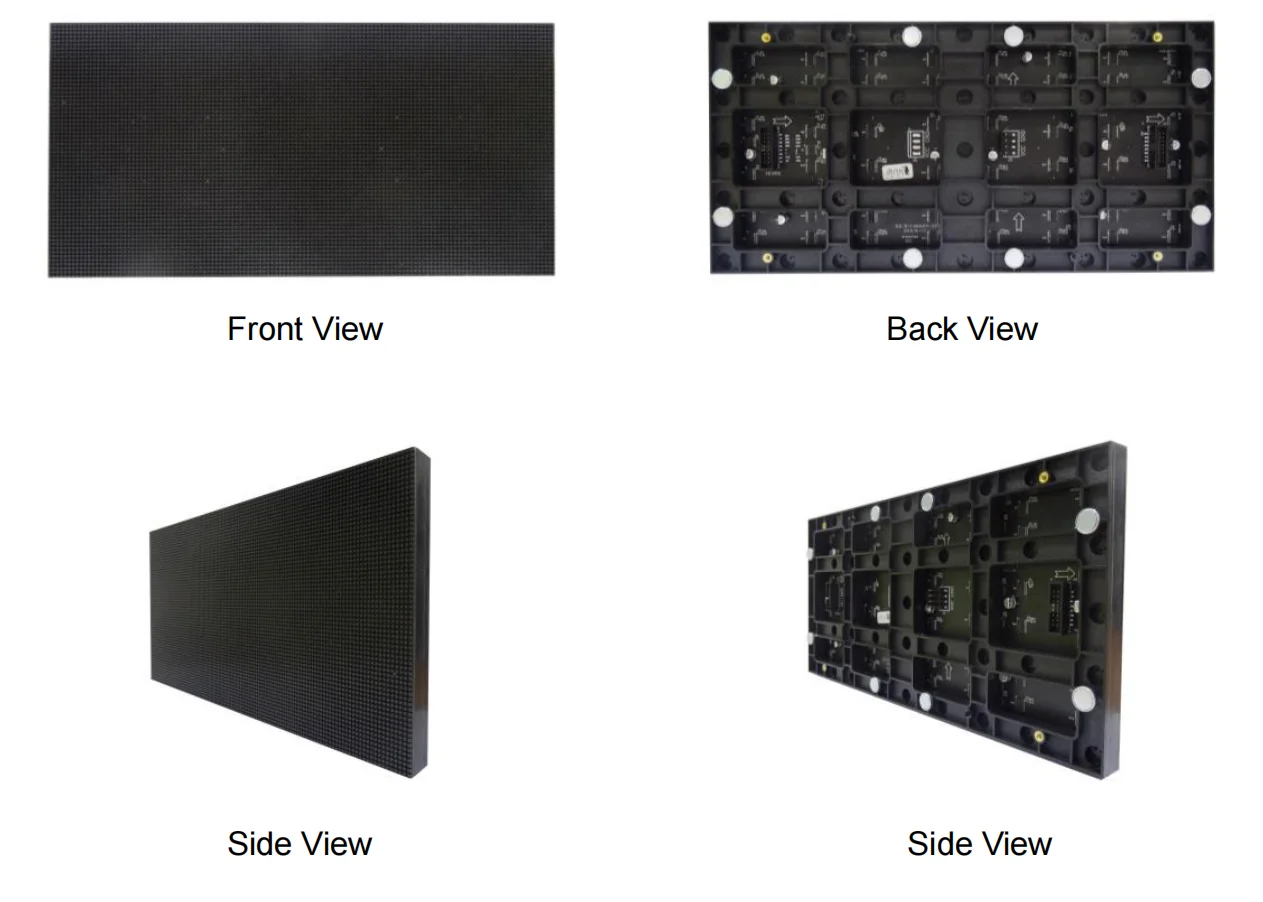
A standard LED module, often referring to an indoor LED display module, is designed for controlled environments such as:
- Conference rooms
- Retail stores
- Exhibition halls
- Control rooms
- Broadcasting studios
Indoor LED modules prioritize high resolution, fine pixel pitch (P1.2, P1.5, P1.8, P2.5), and close viewing distance performance.
They typically do not require high waterproof or UV-resistant protection.
三、Outdoor LED Module vs Indoor LED Module: Key Differences
1️⃣ Waterproof and Protection Level (IP Rating)
- Outdoor LED module: IP65 (front) or higher
- Indoor LED module: Usually IP20–IP30
Outdoor LED display modules must include:
- Waterproof rubber gasket
- Sealed PCB design
- Waterproof glue filling
- Anti-corrosion coating
This ensures long-term performance under rain and humidity.
2️⃣ Brightness (Nits)
- Outdoor LED display: 5,000–10,000 nits
- Indoor LED display: 600–1,200 nits
Outdoor LED screens require high brightness to remain visible under direct sunlight, making high-lumen LED lamp beads essential.
3️⃣ Pixel Pitch Selection
Outdoor LED modules typically use:
- P4 outdoor LED module
- P5 outdoor LED module
- P6 outdoor LED module
- P8 outdoor LED module
- P10 outdoor LED module
Indoor LED modules often use:
- P1.2 LED module
- P1.5 LED module
- P1.8 LED module
- P2.0 LED module
- P2.5 LED module
Outdoor displays generally have larger pixel pitch due to longer viewing distance.
4️⃣ Cabinet Structure & Heat Dissipation
Outdoor LED cabinets are usually:
- Iron cabinets
- Aluminum waterproof cabinets
- Die-casting aluminum cabinets
- Front & rear service design
They require:
- Strong wind resistance
- Efficient heat dissipation
- Drainage structure
- Anti-rust treatment
Indoor LED cabinets are lighter and focus more on seamless splicing and ultra-thin design.
5️⃣ Environmental Adaptability
Outdoor LED display modules must handle:
- -20°C to +60°C operating temperature
- UV exposure
- Strong wind loads
- Dust and sand
Indoor LED modules operate in stable temperature and humidity environments.
四、Required Features of Outdoor LED Display Modules
To meet global project standards, a qualified outdoor LED module must have:
✅ High Brightness SMD or DIP LEDs
Ensures readability in daylight conditions.
✅ Waterproof Design (IP65/IP67)
Front mask + waterproof silicone sealing.
✅ Anti-UV PC Mask
Prevents discoloration and aging.
✅ Strong PCB Board
Thicker PCB for stable current transmission.
✅ High Refresh Rate (≥1920Hz or 3840Hz)
Avoid flicker during video shooting.
✅ Stable Power Supply
Supports long-hour continuous operation.
✅ Energy-Saving Driver IC
Reduces electricity consumption for large outdoor LED billboard projects.
五、Outdoor LED Display Module Application Scenarios
Outdoor LED modules are widely used in:
- Outdoor advertising LED billboard projects
- Sports stadium LED screens
- Shopping mall exterior LED video walls
- Government information release LED display
- Traffic guidance LED display boards
- DOOH (Digital Out Of Home) advertising systems
With the rapid growth of smart city projects and digital signage networks, demand for high-quality outdoor LED modules continues to expand globally.
六、Why Outdoor LED Modules Cost More Than Indoor Modules
Outdoor LED display modules generally cost more due to:
- Higher brightness LED chips
- Waterproof materials
- Stronger cabinet structure
- Anti-corrosion coating
- Higher power consumption components
However, they provide:
- Longer lifespan
- Better weather resistance
- Higher advertising visibility
- Greater ROI for outdoor digital signage investors
七、How to Choose the Right Outdoor LED Module
When selecting an outdoor LED display module, consider:
- Viewing distance
- Installation height
- Local climate conditions
- Budget and energy consumption
- Maintenance method (front service or rear service)
For large outdoor LED billboard projects, it is recommended to consult a professional LED display manufacturer to customize the cabinet structure and pixel pitch configuration.
八、Conclusion
Outdoor LED display modules and indoor LED modules may look similar at first glance, but their structural design, brightness, waterproof rating, and environmental adaptability are fundamentally different.
If your project involves outdoor digital signage, LED billboards, stadium LED screens, or building facade LED displays, choosing a high-quality outdoor LED display module with proper IP rating, brightness, and structural strength is critical for long-term stability and performance.
As the LED display industry continues to evolve, outdoor LED modules are becoming more energy-efficient, durable, and intelligent—helping businesses maximize visibility and advertising impact in competitive markets.
