

Command and control centers play a critical role in industries such as public safety, transportation, energy, utilities, emergency response, and smart cities.
These environments require highly reliable, high-resolution, and continuously operating visual display systems to support real-time decision-making.
Among various display technologies, LED displays have become the preferred solution for modern command and control centers due to their scalability, brightness, and long-term stability.
This article explains what types of LED displays are typically used in command centers and why they are selected.
一、Key Display Requirements in Command and Control Centers
Before discussing LED types, it is important to understand the core requirements of a command and control environment:
- 24/7 continuous operation
- High resolution for detailed data visualization
- Stable brightness with no glare or flicker
- Wide viewing angles for multi-operator rooms
- High reliability with minimal downtime
- Support for multiple data sources and real-time feeds
LED display selection is driven by these functional demands rather than visual impact alone.
二、Fine Pixel Pitch LED Displays (Main Control Video Wall)
Why Fine Pixel Pitch LED Is Preferred
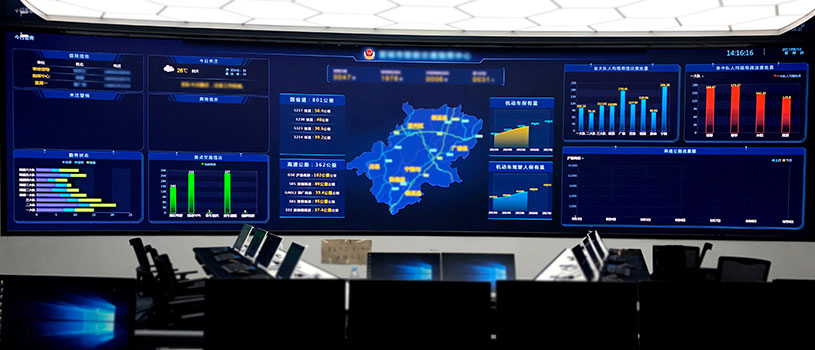
The most commonly used display in command and control centers is the fine pixel pitch LED display, typically installed as a large video wall at the front of the room.
Fine pixel pitch LED screens usually range from P0.9 to P1.8, allowing operators to view complex information from close distances without visible pixelation.
Typical Applications:
- Central monitoring video wall
- Real-time data dashboards
- GIS maps and control interfaces
- Multi-window surveillance feeds
These displays offer seamless, bezel-free visuals compared to LCD video walls, making them ideal for long-term control environments.
三、COB LED Displays for High-Reliability Environments
Advantages of COB Technology
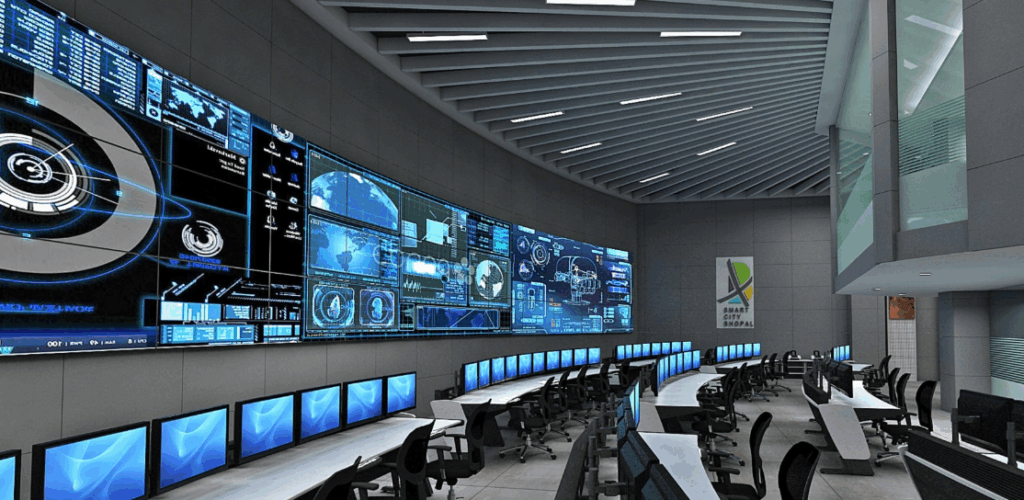
COB (Chip-on-Board) LED displays are increasingly used in high-end command centers where durability and stability are critical.
Key benefits include:
- Enhanced surface protection
- Better heat dissipation
- Reduced risk of dead pixels
- Lower maintenance requirements
COB LED displays are particularly suitable for mission-critical environments where display failure is not acceptable.
四、Indoor LED Displays with Low Brightness and Eye Comfort
Command centers are typically indoor environments with controlled lighting.
LED displays used in these spaces are designed to operate at moderate brightness levels while maintaining image clarity.
Key characteristics include:
- Adjustable brightness to reduce eye fatigue
- High contrast for data-heavy visuals
- Low blue light output options
- Flicker-free performance for long viewing sessions
Visual comfort is essential for operators working long shifts.
五、Curved or Customized LED Video Walls
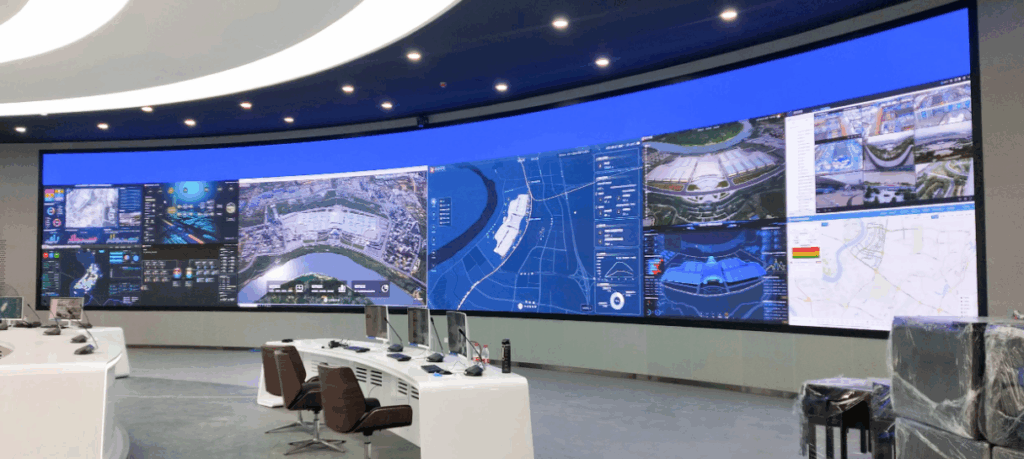
Some command and control centers use curved or custom-shaped LED video walls to match room layout and improve viewing angles.
Benefits include:
- Better visibility across wide control rooms
- Reduced distortion at screen edges
- Improved ergonomic viewing for operators
Custom LED configurations are often used in large-scale or multi-tier command centers.
六、Redundant and Backup Display Systems
Reliability is a core requirement in command centers.
LED displays used in these environments often support:
- Redundant power supplies
- Backup signal paths
- Stable control systems
These features ensure uninterrupted operation during emergencies or system failures.
七、Supporting Display Systems in Control Rooms
In addition to the main LED video wall, command centers may also use:
- Small-pitch LED displays for side walls
- LCD monitors for individual operator desks
- Auxiliary LED screens for briefing and presentations
The LED video wall remains the central visual reference point.
八、Why LED Displays Are Preferred Over LCD Video Walls
Compared with traditional LCD video walls, LED displays offer:
- Seamless viewing with no bezels
- Longer lifespan under continuous operation
- Better scalability for large screens
- Improved brightness uniformity
These advantages make LED displays the long-term choice for modern command and control centers.
九、Conclusion
Command and control centers typically rely on fine pixel pitch indoor LED displays, often enhanced with COB technology, to meet the demands of continuous operation, high resolution, and reliability.
By offering seamless visuals, stable performance, and flexible configuration, LED displays have become a foundational component of modern command and control environments across industries.
