

As VR, AR, and XR technologies rapidly transform modern filmmaking, traditional green-screen production is being replaced by immersive LED virtual production stages, also known as LED volumes. These advanced LED display systems allow filmmakers to create dynamic, real-time 3D environments using Unreal Engine, camera tracking systems, and high-resolution curved LED walls.
Today, LED virtual production is used in movies, TV dramas, commercials, automotive films, brand content, music videos, and more. In this article, we’ll explore the types of LED displays used in XR studios, recommended pixel pitches, budget ranges, advantages over green screen, and why LED volumes have become essential to modern film studios.
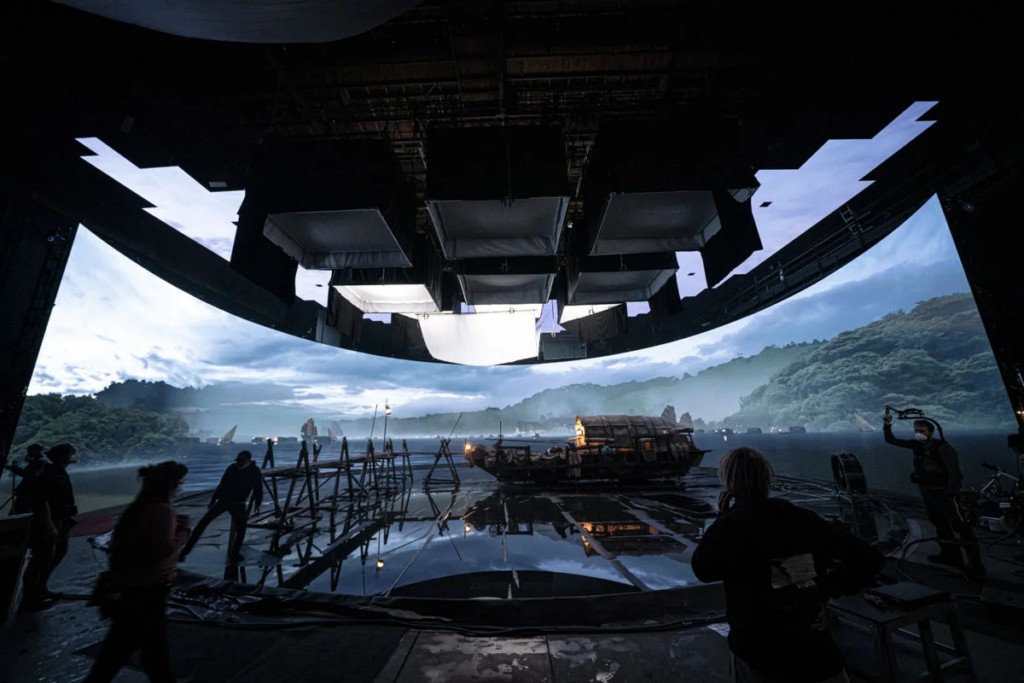
一、What Is an LED Volume in Virtual Production?
An LED volume is a large LED display environment built with high-brightness, high-refresh, HDR-capable LED panels. It typically includes:
- Curved LED background wall (the main XR stage)
- LED ceiling panels
- LED floor (optional)
- Real-time rendering engine (Unreal Engine)
- Camera tracking system (Vicon, Mo-Sys, OptiTrack, etc.)
- Media servers (Disguise, Brompton, Megapixel)
LED volumes allow filmmakers to shoot live-action footage inside a fully immersive 3D world without needing green screen post-production.
二、Types of LED Screens Commonly Used in XR & Virtual Production Studios
Film studios generally use three types of LED displays depending on project demands:
(1) Fine-Pitch LED Wall (Main Background Wall)
- Pixel Pitch: P1.2, P1.5, P1.8, P2.0, P2.6
- Curved LED wall for wide scenes
- HDR brightness, high contrast
- High refresh rate (≥ 3840Hz)
- Uses LED panels with advanced color calibration
This is the most important part of the XR stage and is responsible for rendering the virtual environment.
(2) LED Ceiling Panels (Top LED Volume)
- Pixel Pitch: P2.6, P3.9
- High brightness for lighting support
- Used to simulate skies, reflections, dynamic lighting
The LED ceiling helps integrate real lighting into the scene, reducing external lighting costs.
(3) LED Floor Screen (Optional)
- Pixel Pitch: P3.9, P4.8
- Reinforced load-bearing modules
- Creates ground reflections, water effects, or sci-fi environments
LED floors are ideal for car commercials, futuristic scenes, or immersive 360° production.
三、Technical Requirements for LED Displays in Virtual Production
To achieve a cinematic visual quality, LED displays for XR studios must meet strict standards:
✔ High refresh rate (≥ 7680Hz for premium setups)
Eliminates scan lines and flicker when shooting at high frame rates.
✔ High brightness & HDR10 support
Ensures vivid highlights and realistic lighting.
✔ Wide color gamut (DCI-P3 or Rec. 2020)
Matches film-grade color standards for accurate scene reproduction.
✔ Low scan mode & high frame sync
Ensures perfect synchronization with camera shutter, preventing moiré patterns.
✔ High grayscale performance
Ensures depth and detail even in dark scenes.
✔ Curvable LED panels
Allows building large curved LED volumes for immersive wide-angle environments.
四、How Much Does an LED Virtual Production Studio Cost?
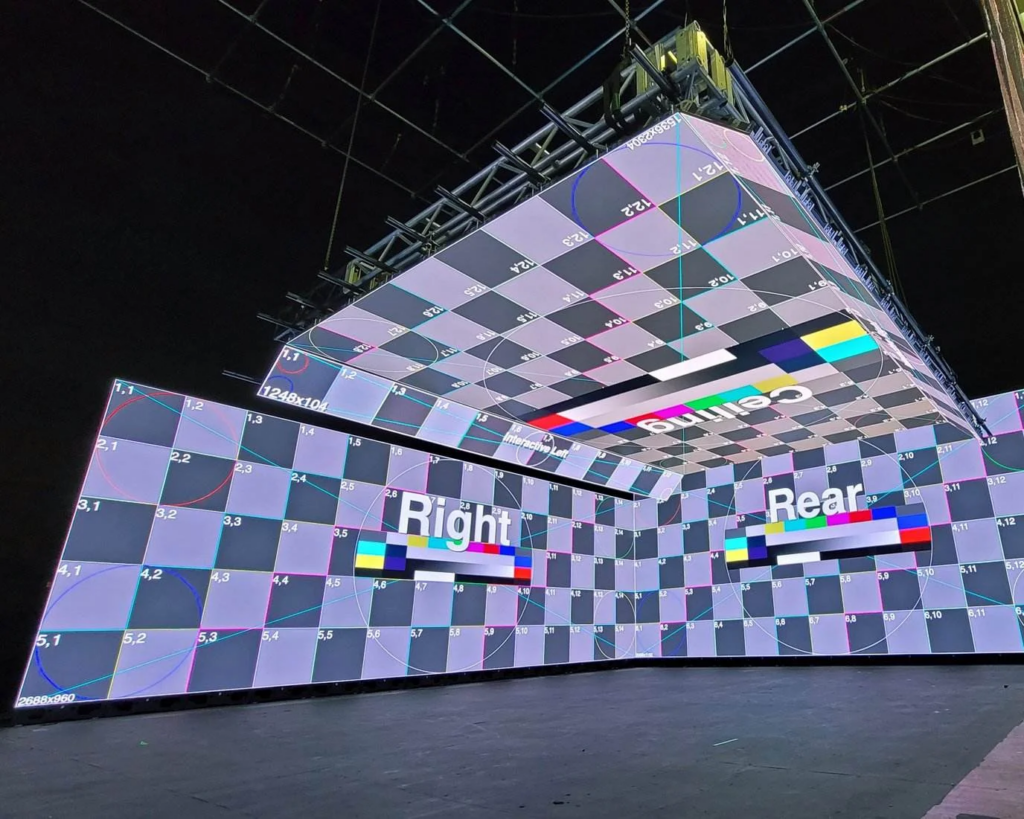
The budget for an XR LED studio depends on size, pixel pitch, and hardware selection.
Small XR Studio (Entry-Level)
- LED Wall: 6m × 3m
- Pixel Pitch: P2.6 or P2.8
- Basic tracking + media server
- Budget: $120,000 – $250,000
Suitable for corporate videos, livestreaming, and small film productions.
Medium XR Studio (Commercial-Level)
- LED Wall: 12m × 4m curved
- Pixel Pitch: P1.5 – P2.6
- LED ceiling + advanced tracking
- Budget: $350,000 – $1,000,000
Great for music videos, advertising, automotive films, and mid-sized movies.
Large LED Volume (High-End Film Studio)
- LED Wall: 20m–30m wide, 270° wrap-around
- Pixel Pitch: P1.2 – P2.0 (fine pitch)
- Full LED ceiling, LED floor, premium controllers
- Budget: $1.2 million – $6+ million
This is the scale used by Hollywood-level productions and premium TV dramas.
五、Advantages of Using LED Displays for Virtual Production
LED virtual production offers significant advantages compared with traditional green screen and CGI-heavy workflows.
✔ Real-time environments reduce post-production workload
Actors can see the environment while performing, improving accuracy and emotional response.
✔ Natural reflections & accurate lighting
LED walls provide real ambient lighting, eliminating artificial lighting complexity.
✔ No keying needed
Saves time and costs by removing green-screen keying & rotoscoping.
✔ Complete creative freedom
Filmmakers can instantly change environments:
- desert
- forest
- cyberpunk city
- space station
- underwater worlds
All available with a button click.
✔ Efficient shooting schedules
Weather, time of day, or location constraints no longer matter.
✔ Cost-effective compared to physical location shoots
Avoids travel, transport, accommodations, and outdoor permits.
✔ Supports Unreal Engine real-time rendering
Achieves a true cinematic look with interactive 3D environments.
六、Most Popular Pixel Pitches for Film LED Walls
- P1.2 fine-pitch LED display for film
- P1.5 LED walls for virtual production
- P1.8 XR LED backdrop
- P2.0 & P2.6 LED volume screen
- P3.9 LED ceiling display
七、Where LED Virtual Production Is Used Today
LED walls for XR film production are widely used in:
- Film production studios
- TV drama production
- Commercial advertising studios
- Automotive product shooting
- Music video production
- Corporate brand content rooms
- Events and theme parks
- VR filmmaking training centers
The technology is becoming mainstream because it significantly reduces costs while improving visual results.
八、Conclusion: LED Virtual Production Is the Future of Filmmaking
From blockbuster films to YouTube commercials, LED screens for VR/XR filmmaking are transforming the entire production process. They provide unmatched flexibility, real-time performance, and cinematic quality, while drastically reducing post-production time and location costs.
For film studios looking to upgrade to next-generation production technology, building an LED volume with fine-pitch LED displays is one of the most strategic investments available today.
